


How to Increase Event Attendance and Reduce No-Shows

Event teams at associations and professional networks pour weeks into promotion, so seeing part of the registered list skip check-in on the day can be frustrating. Your community may show real interest at registration, only for that enthusiasm to fade before the event opens its doors.
In this guide, we'll share proven strategies for how to increase event attendance among your members, in person and online. We'll also cover the promotion mistakes that quietly hurt turnout.
TL;DR: How to Increase Event Attendance
Increasing event attendance means closing the gap between a member who registers and a member who checks in, and it’s possible with the 7 strategies we'll cover in detail below:
- Personalize invitations using the existing member data.
- Follow up regularly after registration.
- Tie the event to a clear member outcome.
- Turn members into event advocates.
- Build events around chapters and committees.
- Treat virtual attendance as its own strategy.
- Offer more than one time slot.
We’ll discuss each strategy in detail later in the guide, with practical steps that turn registrants into members who attend.
Why Event Attendance Is More Than a Registration Metric
Registrations show initial interest, but attendance reveals whether an event actually delivers on that interest. Tracking attendance alongside registrations gives you a clearer picture of event performance and audience engagement.
Here’s why attendance deserves to be tracked as a key event performance metric:
- Measures Actual Engagement: Attendance shows how many registrants follow through and participate in the event.
- Reveals Audience Quality: A high registration-to-attendance rate indicates that the event is attracting genuinely interested attendees.
- Impacts Event ROI: More attendees mean greater value from investments in speakers, venues, marketing, and event technology.
- Improves Future Planning: Attendance and no-show patterns help organizers refine timing, reminders, messaging, and registration strategies for future events.

What Causes Low Event Attendance
Low turnout can stem from more than one cause, but most start well before the event itself.
Let’s explore the 4 major causes that repeat across event data from associations and professional networks:
- Every Invitation Feels Like a Mass Email: A single blast to your full list treats a 20-year member and a first-year member the same way. Neither one feels like the invitation was written for them.
- Detaching Events From Your Year-round Engagement Plan: An event with no link to your ongoing membership engagement strategy can lead to poor attendance. Your members may skip anything that feels disconnected from what they're already doing with your association or professional network.
- Not Following Up After Sign-Up: Many associations and professional networks send one confirmation message after a member signs up for an event, then go quiet until the event opens. A member who registers in March and hears nothing again until October is likely to forget about the exact dates or even the event itself.
- Promoting Virtual and In-Person Sessions the Same Way: When your team builds one promotion plan for both formats, virtual attendees receive messaging built for an in-person crowd. Virtual attendees need a login link close to the start time and a clear note on time zones. If these are missing, it’s easy for them to miss the session without anyone noticing.
7 Strategies to Increase Event Attendance
Each cause above points toward its own fix.
The 7 strategies below turn those fixes into a specific plan your team can implement before the next event on your calendar:
1. Personalize Invitations With Member Data
Your member and learner database already has most of the information you need to personalize invitation messages, including each member's career stage, past event attendance or engagement, and continuing learning requirements that are still due.
For example, a chapter leader who emails a personal note to 40 members draws a stronger response than a single blast sent to 4,000 people. The personalized note stands out in an inbox full of generic emails. A member is much more likely to open something that names their own chapter or their specific CE requirement because the message reads like it was written just for them.
2. Follow Up Regularly After Registration
The follow-up or reminder messages you send between the time a member registers and the day of the event can determine whether they attend. Ensure you send a calendar invite the moment someone registers because a saved date on a personal calendar works better than a confirmation message that goes unread in their inbox.
But a single follow-up leaves too much silence. After sending a save-the-date message at registration, it’s important to send a value reminder a few weeks out. You can also add a final nudge several hours before the session opens.
3. Tie the Event to a Clear Member Outcome
You’ll need more than the event name or title to convince a busy professional to clear time on their calendar to attend. Your subject line should lead with the outcome. For example, “Grant Writing Workshop: Walk Away With 2 CE Credits and 3 Ready-to-Use Templates" gives a member much more reason to click than a plain title like "Fall Member Webinar."
When describing the event, it’s best to use language a member could repeat to a manager or peer who asks why the event is worth their time.
4. Turn Members Into Event Advocates
Some members trust a peer's invite more than a marketing email from your association or professional network. To spread the word and convince more members to attend, recruit several of your most active members as event advocates. Give each advocate a message template and a personal registration link to share within their network.
You might also want to explore online community engagement activities that increase member participation, such as a referral leaderboard and member spotlights. These can turn active members into people who bring in at least 2-3 colleagues without a reminder.
5. Add Chapters and Committee Touchpoints
A national webinar reaches your broadest audience and remains one of the most important events on your calendar. However, a chapter meeting or committee session serves a different purpose. The invitation comes from a smaller group the member already knows, which adds a touchpoint that feels more personal.
You can break the main event into smaller events and ask your chapter or community leaders to promote and host them. Several smaller, well-hosted sessions can add up to more total attendance than one large national push.
6. Give Virtual Sessions Their Own Format
A virtual session competes with more distractions than an in-person event because it's just a tab away from a totally different email or another online activity. You can keep virtual sessions shorter than in-person formats.
Also, open each session with something interactive within the first few minutes, such as a quick poll or a one-question icebreaker. Keeping the whole session interactive from there, with more polls and quick questions throughout, does more to keep attention than a single icebreaker on its own.
Shorter, interactive sessions outperform long virtual presentations, which is the same principle behind strong community engagement with webinars and meetings across your calendar.
7. Offer More Than One Time Slot
A single time slot works against you the moment it conflicts with a member’s other commitment, such as a board meeting or a client call. You may also face the same problem if you have members in different time zones.
Offer the same session twice, once in the morning and once in the evening. A member can then pick whichever slot fits their day.
A second live slot works better than a recorded replay alone. A member who attends the second slot still asks questions and takes part in the discussion, something a replay can't offer.

Common Event Promotion Mistakes That Hurt Attendance
Low turnout isn't always about a member's interest. Certain promotion habits can quietly work against attendance without anyone on your team noticing.
We often see the following 4 mistakes when associations and professional networks promote events:
- Using Only One Channel for Invites: An email-only invitation misses members who check your community platform more than their inbox. Post the event on your community platform or in a committee channel too. Email alone leaves too much to chance.
- Not Creating Urgency: A promotion email with no deadline and no sense of momentum reads the same on day one as it does a few days before the event. Your members put off registering when nothing gives them a reason to act now. Add a real deadline or a visible signal of momentum, such as a seat count for the last few reminders or an early-bird cutoff to the first message.
- The Value Proposition Comes Too Late: It's okay to provide parking instructions and a schedule grid to potential participants, but only after a member already has a reason to attend. Lead every promotion piece with the outcome a member walks away with to prove value first, then follow with the event perks.
- Using the Same Promotion Messages as the Last Event: Reusing the last event's invitation saves you time, but it also sends a quiet signal that the event hasn't changed at all. Members who skipped the event once can still skip it again if the description doesn't reflect something new. It’s advisable to update the event outcome and speakers, as well as the format of the invitation each time you send it.
Why Generic Event Tools Fall Short for Associations
Most event registration tools collect a sign-up and send a confirmation. But they don't connect that sign-up to the rest of a member's record, so course history and committee service live in a separate system from the one that monitors renewal dates.
A standalone engagement platform built only for check-in can’t flag which members are at risk of skipping a session. Some also leave your team pulling separate exports and cross-checking spreadsheets to see how one event connects to a member's broader engagement, which is work that a connected system handles on its own.
That’s why you need an association-specific engagement solution.
At Forj, our approach links your event data to every other signal in a member's profile. Every registration and check-in connects directly to that member's profile, including the course history and committee work we’ve covered above.
Here’s how our solution helps:
- Forj Learn Turns a Single Session Into a Full Learning Path: You can create a course connected to the event topic and based on your members’ event records, then deliver it through Forj Learn. This gives attendees a next step after the time they spent at the event, with the added benefit of automatic CE credit tracking without leaving the experience.
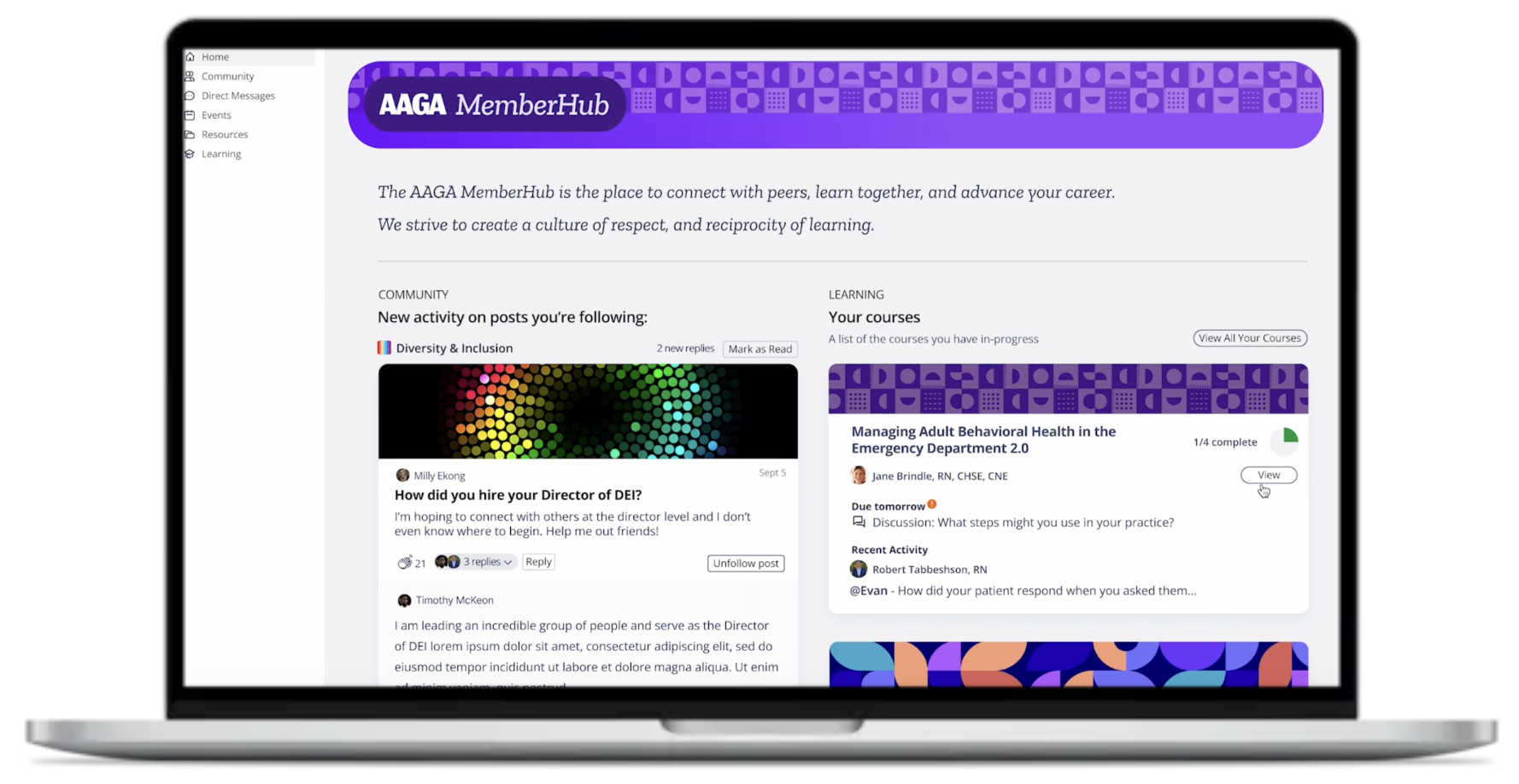
- Forj Connect Keeps the Conversation Going After the Session Ends: With Forj Connect, you can automatically add every attendee who checks in to a community space built around that event topic. The follow-up conversation lives on the same member profile as the session itself, without the need for a separate login.
- Journey by Forj Connects the Event to the Rest of the Member Path: You get a single experience that moves a member from event registration into community and course activity without a second login or a second data-entry process to track. Your team sees the full path in one place without stitching data together by hand.
- Forj Analyze Shows Which Invitations and Segments Work: With Forj Analyze, your team sees registration and check-in data next to a member's full engagement history. Your team can trace a single event's ripple into course sign-ups and community activity without pulling data from three separate places. Also, the data you collect across multiple events can help you uncover topics that resonate with different member segments, and you can turn them into courses to increase non-dues revenue.
Connect with our team today to explore how Forj can help you increase event attendance and member engagement.

Frequently Asked Questions (FAQs)
Let’s wrap up with quick answers to the questions event planners at associations and professional networks ask most often:
What Is a Good Event Attendance Rate for an Association?
There’s no fixed ideal event attendance rate for an association or professional network. Among other factors, a rate's quality depends on the type of event, the size of your target audience, and how well you promote it. For instance, a national webinar and a small chapter meeting can have very different ranges.
It’s best to compare your rate against your own event history over time because a single outside benchmark that doesn’t account for your organization’s unique circumstances might misguide you.
How Many Attendees Should You Expect From Your Member List?
The number of attendees you should expect from your member list depends on list size and event topic, among other factors. A highly engaged list of a few hundred members can outperform a passive list of thousands.
Track your conversion rate over several events to better understand your typical attendance rate.
Does Charging for an Event Increase Attendance?
Charging for an event can reduce no-shows in some cases.
A small fee can help you filter out registrants whose interest was mostly curiosity.
Should You Cap Registration or Use a Waitlist?
You can set your cap closer to the capacity of the event’s physical venue or online platform to create a legitimate urgency or fear of missing out. The visible scarcity reinforces their decision to register early and gives anyone who’s still deciding a reason to act.
A waitlist keeps a ready list of backup registrants for seats that may open up if some members don't attend.
Who Should Be Responsible for Increasing Event Attendance?
It’s best to share responsibility for increasing event attendance between your membership team and chapter or committee leaders.
The membership team can own the data behind segmentation and the reminders, while the chapter and committee leaders can own the peer relationships that make an invitation personal.
Conclusion
To increase event attendance as an association or professional network, you’ll have to do more than send the first outreach message and the final reminder. A personal invite works better than a mass email. Several touchpoints between sign-up and the event are better than a single confirmation message.
Most importantly, you need to connect your event data to your member profiles and overall engagement data.
At Forj, we treat event data as part of every member signal.
Our community solution keeps the conversation going once a session ends, while our learning management system turns that session into a full learning path with CE credit tracked automatically.