



Community Management Tools for Associations: Build the Right Stack

Most membership directors and community managers at associations juggle disconnected tools to keep members engaged between annual events.
You've got one system for forums and another for courses, but nothing connects them. Your members get a fragmented experience while your team spends more time on software than on member relationships.
The right community management tool can close the gaps and unify everything into one connected experience.
Let's walk through the best community management tools for associations and professional networks and what features matter most. We'll also cover how the right choice strengthens year-round retention.
TL;DR – Best Community Management Tools
These are the 5 community engagement tools we'll compare in detail below.
| Tool | What Makes It Stand Out |
| Forj | Unifies community, learning, and behavioral analytics in one member experience |
| Higher Logic | Deep AMS integrations with automation and email tools |
| Hivebrite | Strong visual branding with event-focused member engagement |
| Mighty Networks | Combined community spaces with native course features |
| Breezio | AI-powered content recommendations with knowledge-base features |
What Are Community Management Tools?
Community management tools are digital solutions that help you build, run, and grow member communities in a shared online space.
If you're a membership director or community manager at an association or professional network, you'll rely on these tools to replace scattered forums and email chains with one structured, year-round experience.
Let's break down the basics:
- What They Do: Your members get a centralized space to connect through discussions, peer groups, and events. Your team is able to track engagement and act on behavioral signals before members disengage.
- Who Uses Them: Association executives, membership directors, learning leaders, and community managers use community management tools to keep members active between conferences and other annual events.
- Why They Matter: Passive members or learners turn into active contributors who refer colleagues and renew in time. More members also participate in continuing education to earn credits. The strong community management strategy your organization puts in place strengthens both retention and non-dues revenue.
Whether you're evaluating your first community management software or replacing one your members have outgrown, the categories below will help you understand what to consider.
Community Management Tools vs. Social Media Tools
You'll find a lot of overlap between community management tools and social media management tools, but they serve very different purposes.
Social media tools such as Buffer, Sprout Social, and Hootsuite help you schedule posts, track mentions, and manage your presence on channels you don't own. You're renting space on someone else's network.
Community management tools put you in control of the data, the branding, and the full member experience.
For associations and professional networks, the goal isn't brand awareness on platforms like Instagram. You need a space where members collaborate on real professional challenges, participate in online community engagement activities, and stay connected to your organization through every stage of their career.

5 Best Community Management Tools
Your choice of association community software depends on your goals, your members' expectations, and how you want community and learning to work together. The tools below each serve member-based organizations, but they differ in scope and where they add the most value.
1. Forj
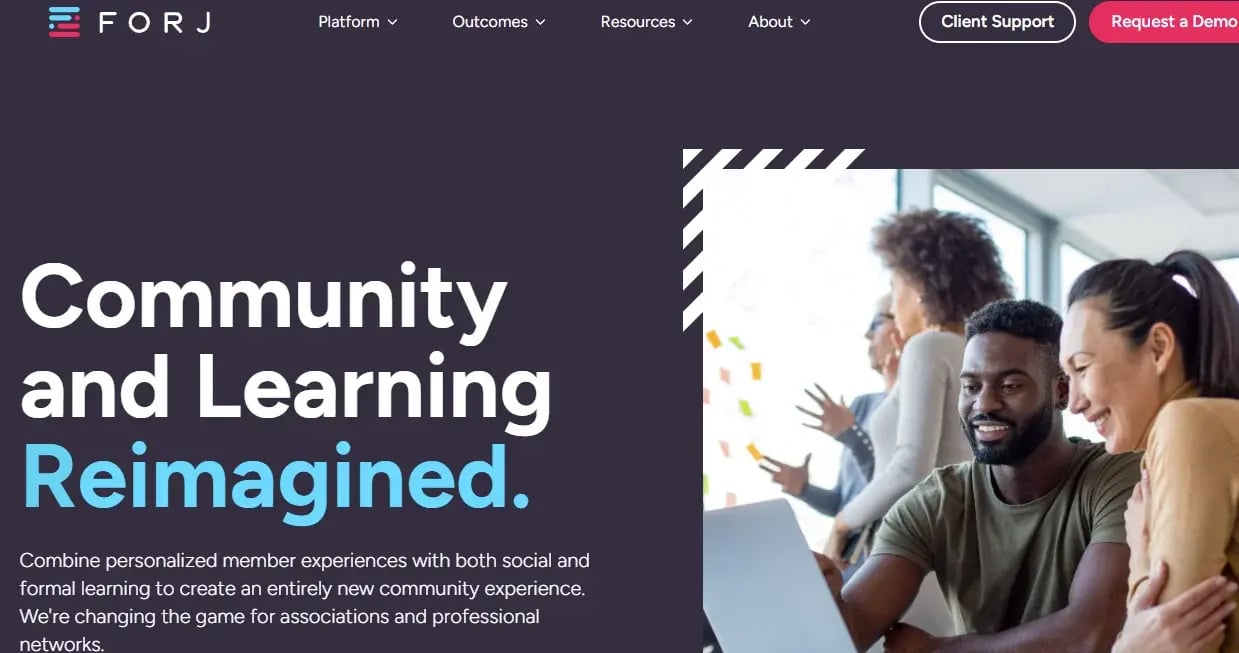
Forj is a community and learning experience solution purpose-built for associations and professional networks. Where other tools treat community and learning as separate products, Forj connects peer conversations, continuing education, credentialing, and behavioral analytics in one unified member experience.
Over 300 associations and professional networks use Forj to engage more than 1 million professionals across healthcare, finance, and education.
The Independent Community Bankers of America (ICBA) built a 5,000-member digital community in just 2 years with Forj's unified approach. MAASE used Forj to unify community and learning for special education leaders statewide.
Here's how Forj's connected approach supports your member experience:
- Forj Connect for Community: Members get branded peer-to-peer spaces, subgroups, events, and member directories for year-round professional conversations. A healthcare association, for example, can create specialty-specific subgroups where nurses discuss clinical best practices between annual conferences.
- Forj Learn for Personalized Learning: Your team can offer personalized continuing education and credential tracking. You can also offer structured course paths connected to community discussions through socialized learning. Members can complete a CE module and join a peer Q&A group where they apply new concepts to real-world cases.
- Journey by Forj for the Unified Experience: This solution brings together community, learning, and analytics into one seamless member experience. Your members flow from coursework to peer discussion to credential records without needing a second login.
- Forj Analyze for Data: The behavioral analytics solution shows you engagement trends, flags retention risk, and highlights members who can mentor others or contribute content. For example, your membership director can identify which members haven't logged in for 60 days and trigger a personalized re-engagement campaign.
See how Forj strengthens year-round member engagement for associations.
2. Higher Logic
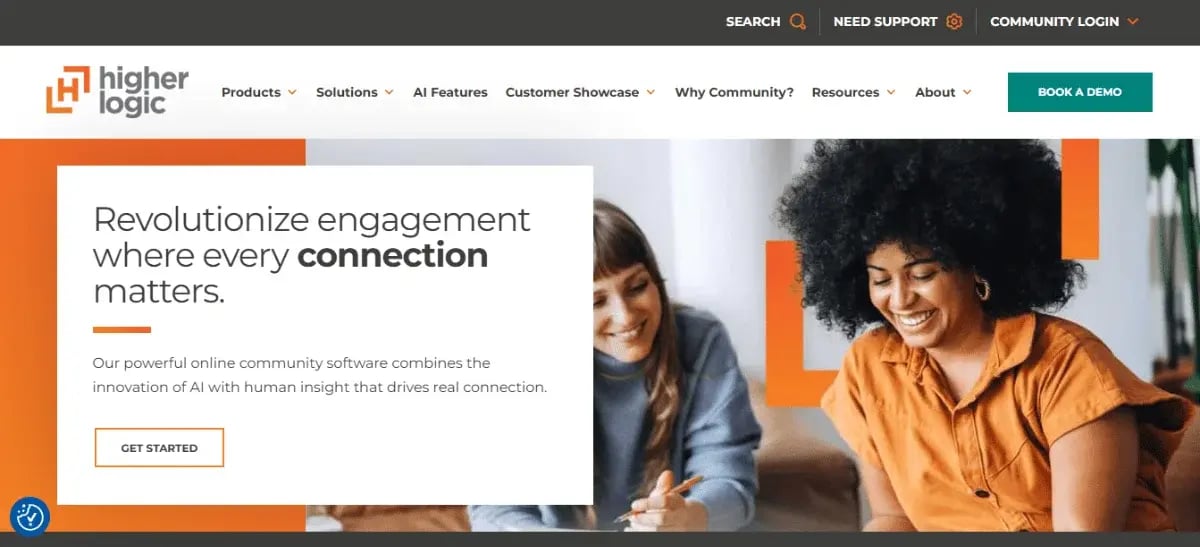
Higher Logic is an online community management solution designed for associations that need discussion forums, email campaigns, and workflow automation.
The tool integrates with several major AMS providers, which makes syncing member data and managing renewals more streamlined for your operations team.
The platform's core strength is in email automation paired with community discussion features. Associations that rely on email as a primary communication channel may find it a natural fit.
Higher Logic doesn't have a native LMS. You'll need a separate solution if your member experience includes continuing education with advanced credentialing.
3. Hivebrite
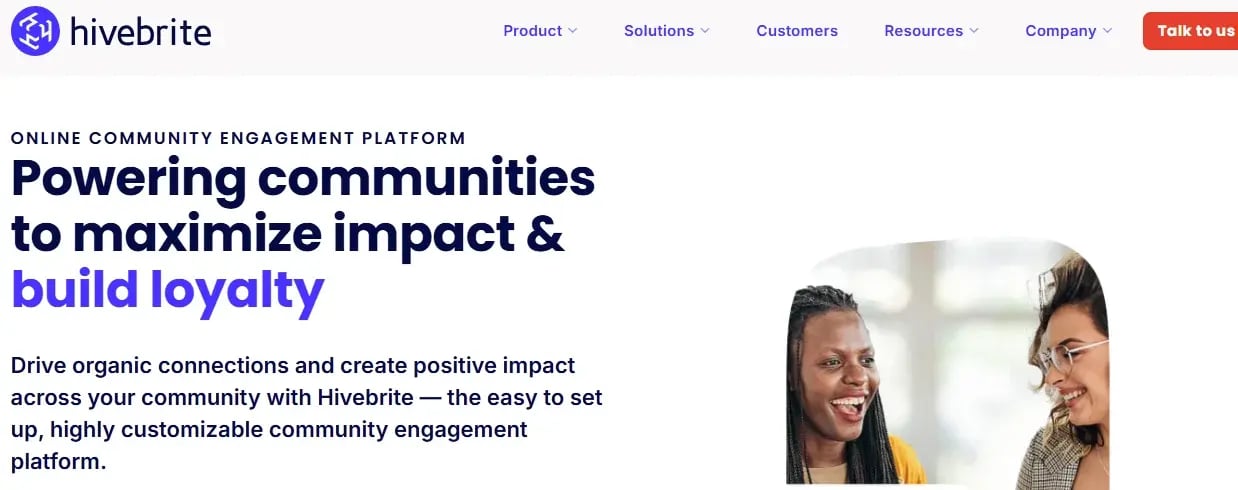
As a white-label community solution, Hivebrite offers alumni networks, associations, and nonprofit solutions such as event management, member directories, and branded digital spaces.
Your organization gets full visual control over the online community experience, from colors and layouts to domain branding.
The event tools and branding options make it a functional choice for organizations that host frequent networking events.
Hivebrite doesn't offer deep behavioral or learning management analytics. This means you may need a separate learning management system to help your members fulfill their professional development goals.
4. Mighty Networks
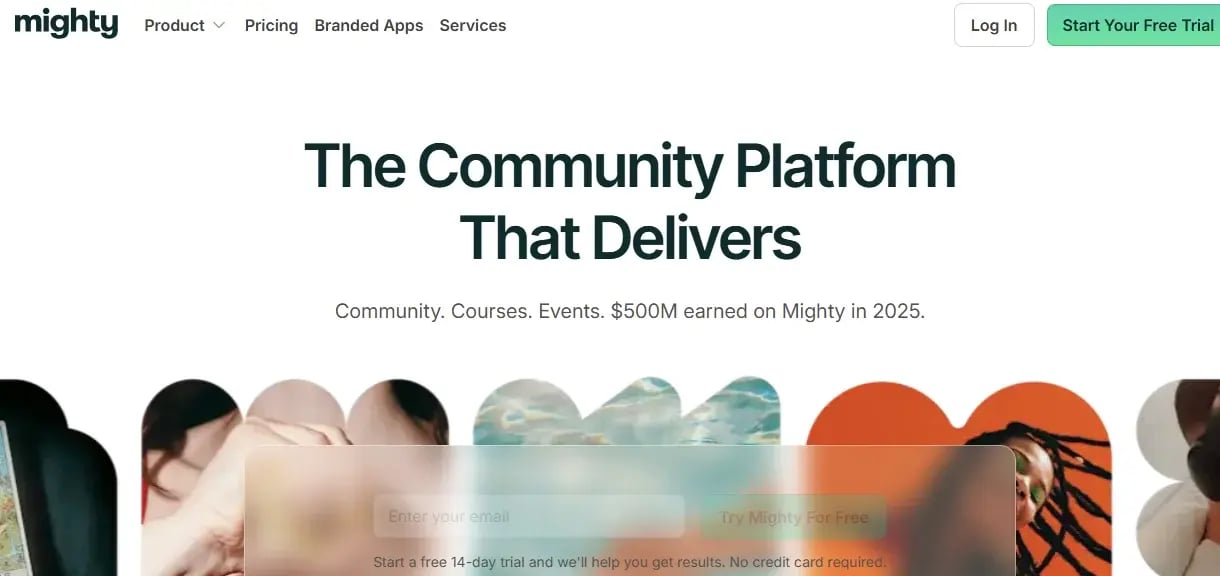
Mighty Networks is a community and course solution that combines discussion areas, livestreams, and paid access options in one online community platform. It helps creators and smaller organizations that want a combined community and course experience without having to juggle multiple systems.
Associations and professional networks that require AMS connections, CE credit tracking, and the depth of a purpose-built community platform for associations may find Mighty Networks limited in scope for their member experience goals.
5. Breezio

Breezio is a community engagement solution for member-based organizations looking for branded discussion groups, AI-powered content recommendations, and content tools.
The solution integrates with major AMS providers and supports knowledge-base features that help members find answers without filing a support ticket.
Breezio doesn't support advanced reporting and in-depth formal learning management. You'll need to combine the tool with a purpose-built learning management solution if you want to have structured courses and behavioral analytics as part of your strategy.
No matter which tool you evaluate, the strongest results come when your community experience and your learning experience work as one connected system for your members. The results get even better if the tool tops it all with member data and behavioral insights.
What to Look for When Evaluating Community Management Tools
Most evaluation processes focus on feature checklists, but your members won't renew simply because you have a robust admin dashboard. The criteria below help you evaluate what your members actually experience and what your data reveals about retention.
1. Ease of Use for Members Rather Than Just Admins
The most common evaluation mistake associations make is testing the admin dashboard without asking what their members see on the member dashboards on day one. If the interface feels confusing or outdated, members won't return after their first login. Ask your vendor to demo the full new-member onboarding flow and the mobile experience so you can see for yourself what it’s like.
2. AMS Integration Depth
Confirm whether your preferred community tool and your AMS can sync in real time because a one-way export that updates once a week doesn't qualify as in-depth integration. Your organization should opt for real-time bidirectional data flow, which helps keep member records accurate across both systems. You won't need to ask your staff to maintain the records manually.
3. Analytics That Connect to Retention
The tool you choose should show member engagement trends by member segment and flag at-risk members before they drop off. Solutions that only report vanity metrics such as logins and page views, don't give your community manager the signals they need to intervene. The best member engagement tools connect participation patterns to renewal outcomes, such as showing the percentage at which active members renew compared to nonparticipants.
4. Community and Learning on One Solution
The vendor should show how your members can move from a completed course to a relevant peer discussion without having to use a separate tool. If they’ll require a third-party connector or a URL redirect, the experience breaks at the member level. You would have better results with a unified system because when community and learning exist in the same environment, members stay engaged longer.
5. Scalability and White-Label Options
Associations and professional networks that plan to increase their membership or add chapters in the next few years need a solution that won't require a full migration after the goal is attained. You must ask the vendor about white-label branding and how their pricing model changes as your organization scales. You should also confirm whether sub-community or chapter features come included or as paid add-ons.
To choose the right tool, your evaluation checklist should reflect the member experience you want to create. Every question you ask a vendor should connect back to a real member outcome.
How Community Management Tools Improve Member Engagement
Retention and engagement are deeply connected in that your members stay longer when they find consistent professional growth opportunities between annual events. The right member engagement solution creates ongoing value by connecting community and learning in one experience.
Here's what strong community management tools help you accomplish:
- Year-Round Peer Connections: Members who build relationships with peers through online discussions and subgroups don't necessarily need a reminder email to renew. Their professional network becomes tied to your organization.
- Socialized Learning Experiences: Learning reinforces itself if your members can complete a course and seamlessly join their peers to discuss what they've learned. Community management tools help you combine formal education and peer conversation, which effectively separates active members from those who log in once and fail to show up again.
- Behavioral Insights for Smarter Strategy: The best tools surface data about which topics trend in your community and which members show retention risk. When you can measure community success through engagement patterns, your team can intervene before a member lapses.
- A Faster Start for New Members: New members who get matched with the right subgroup and a recommended learning path within minutes are more likely to return the following week. You make the value of membership clear from the very first interaction.
At Forj, we connect every engagement touchpoint, from peer conversations to continuing education to behavioral analytics, into one unified member journey. Your members get a seamless experience between learning and community. Your team gets real-time retention signals and the data to act on them.
Talk to our team today about building a connected member experience for your organization.

Frequently Asked Questions (FAQs)
Here are answers to common questions association leaders and community managers ask when evaluating community management tools.
What Is the Difference Between Community Management Software and an AMS?
Community management software and an AMS handle different sides of your member experience. Your AMS manages the operational back end: dues, membership records, event registration, and compliance reporting.
Online community management software creates the member-facing engagement experience through discussions, peer connections, and professional development.
Most associations need both. The key is bidirectional integration, which keeps your member data accurate and your engagement signals visible across both systems.
How Long Does It Take to Launch a New Community Management Platform?
The time it takes to launch a new community management platform varies from one association to another. Most purpose-built solutions can be configured and ready within 4 to 12 weeks, depending on data migration complexity, AMS integration depth, and customization scope.
Member adoption often takes longer than the technical setup. You should plan for the technology launch and a dedicated member activation phase as separate milestones.
What Community Management Features Matter Most for Member Retention?
The community management features that matter most for retention include peer-to-peer connections, integrated learning, and personalized engagement.
Members stay when they build professional relationships that they can't replicate elsewhere. They also stay when your solution helps them earn credentials and advance their careers.
When you pair these features with consistent association member engagement strategies, you can see higher renewal rates that reflect the investment.
How Much Do Community Management Platforms for Associations Typically Cost?
Community moderation tools and full community management solutions for associations vary widely in cost.
Smaller tools (such as Mighty Networks and Circle) range from $99 to $999 per month.
Enterprise and association-focused solutions (such as Hivebrite, Higher Logic, Forj) use custom pricing based on member count, features, and the level of support you require.
You should evaluate the total cost of ownership because setup, training, and integration expenses add a significant cost on top of the monthly license fee.
Next Steps
You need the right community management tools to ensure your association or professional network can turn scattered engagement into a connected, year-round member experience.
The strongest solutions unify community and learning in one environment and equip your team with behavioral analytics.
At Forj, we bring community, learning, and data together in one unified member journey built for associations and professional networks. Your membership director and learning leaders get real-time retention signals, while all your members get a seamless experience from onboarding through renewal.

.webp?width=1200&height=800&name=Why%20LMS%20User%20Engagement%20Fails%20(and%20How%20to%20Fix%20It).webp)