



Top 5 Circle.so Alternatives for Growing Communities

Associations and professional networks often hit the same wall with their community tools:
- Your community lives in one tool, your LMS in another, your AMS in a third
- Credential tracking happens outside the community
- Engagement data remains shallow, with no way to predict which members are at risk of leaving.
A community solution like Circle.so offers a clean design and simple course tools that work well for creator-focused communities.
But what are the best alternatives to Circle when you need deeper functionality, such as AMS integration, certification tracking, and behavioral analytics?
Let's explore the top five Circle alternatives built for professional member engagement.
TL;DR - Best Alternatives to Circle
Here's a quick overview of the best Circle.so alternatives for associations and professional networks.
|
Alternative |
What Makes It Stand Out |
|
Forj |
AMS-ready, purpose-built for associations and professional networks, unifies community, learning, and behavioral analytics in one member experience |
|
Higher Logic |
AMS connections, strong email automation, and well-established in the association space |
|
Hivebrite |
Flexible member directories, event tools, and customizable community portals for alumni and professional networks |
|
Mighty Networks |
Course and community bundles, mobile-first design, strong for independent networks and coaches |
|
Breezio |
AI-powered content discovery, knowledge-base focus, built for professional peer learning |
Each of these alternatives to Circle serves a different niche. Your ideal pick depends on your engagement goals and the kind of experience your members expect.
Why Organizations Explore Circle Alternatives
The gap between creator-first tools and what associations and professional networks actually need keeps widening as members’ expectations keep changing.
Below are a few common frustrations that push organizations toward Circle Competitors.
- Shallow AMS and LMS Connections: Most associations and professional networks depend on an AMS for membership data. Circle's limited connection to those systems forces manual workarounds and creates data gaps for your team.
- A Creator-First Feature Set: Circle works well for coaches and independent creators who want to grow an audience. The creator-first approach doesn't work well for organizations that serve thousands of credentialed professionals.
- Surface-Level Engagement Data: You'll struggle to find behavioral analytics or retention-risk indicators inside Circle. Without them, understanding member disengagement becomes guesswork.
Circle still has strengths you should consider. The interface is clean, and the course builder suits smaller cohorts.

Key Criteria to Use When Evaluating Circle Competitors
Your next community experience should solve the problems your current one created or failed to solve.
The search is easier once you know exactly what your members and teams need most, such as:
- Compatibility with Your AMS and Tech Stack: Your new solution should connect with your AMS, eCommerce, and credentialing tools without clunky workarounds. A seamless member data flow saves your team hours every week. If your membership director has to export CSV files from one system just to update another, that's a red flag.
- Credential and Certification Support: For your members to earn professional credentials, you need built-in tools to track compliance, issue certificates, and manage continuing education requirements.
- Behavioral Insights and Analytics: Look for a solution that goes deeper than page views. You want to know which members are likely to leave, which topics trend most, and where non-dues revenue opportunities lie.
- Year-Round Engagement Tools: Your members deserve more than a burst of activity at the annual conference. The right solution keeps them engaged every month, which ensures they continue learning and interacting with their peers throughout the year.
As with other tools, a feature checklist alone won't tell you whether the solution aligns with your strategic goals and member journey.
These criteria map directly to what a unified member experience platform provides: community tools for year-round engagement, learning systems that blend formal and social experiences, and behavioral data that transforms insights into strategy.
Best 5 Circle.so Alternatives to Consider
The community experience your members need goes well beyond a basic forum or community tool.
The following alternatives to Circle.so offer distinct strengths for associations and professional networks.
1. Forj

Forj brings community, learning, and behavioral analytics together in one unified member experience built for associations and professional networks.
Where most solutions treat community and learning as separate features, Forj connects them into a single solution.
For example, your members can move from structured coursework into peer conversations that reinforce what they just learned.
Your members get a faster, smoother experience because everything lives in one place. They earn credentials, join discussion groups, and discover new courses without leaving the branded environment.
Admin teams benefit as well, because Forj connects with your AMS and delivers the learning management system analytics your team needs to make smarter decisions.
Forj has helped organizations like MAASE unify community and learning for special education leaders.
Forj also powered MembershipU, XYZ University's first-ever learning community for membership professionals.
Here are the key pillars of the Forj experience that support your community-driven learning strategy:
- Forj Learn: Your organization can use Forj's LMS to deliver personalized learning experiences with certification tracking, continuing education, and structured course paths tailored to each member's career goals.
- Forj Connect: You can have peer-to-peer spaces where members share knowledge, ask questions, and nurture professional bonds that keep them engaged all year. Members within these spaces or groups can troubleshoot real industry challenges together between major events.
- Forj Analyze: You also get behavioral insights that reveal engagement trends, retention risks, and new non-dues revenue opportunities behind every decision your team makes. You'll see exactly which content topics drive the most participation, and which members need a nudge to re-engage.
- Journey by Forj: This is Forj's flagship experience layer that ties community, learning, and analytics into one seamless member journey. Your members experience one connected environment from onboarding through renewal, with every touchpoint personalized to their professional path.
Book a demo today to see Forj's unified approach in action at your organization.
2. Higher Logic
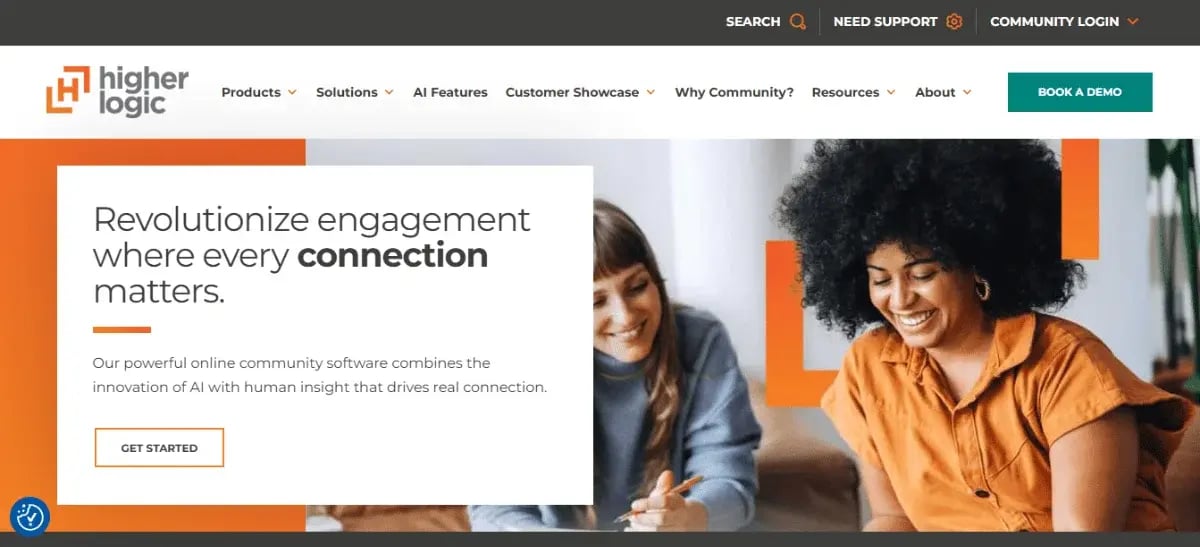
Higher Logic is an established name in the association community space, with email automation, discussion forums, and member directories that tie into AMS tools such as iMIS, Salesforce, and Aptify.
Associations and professional networks that want a traditional online community with strong email tools will find Higher Logic a solid match.
The gap shows up in user experience. Higher Logic’s interface can feel clunky and dated, especially the page editor and content library, which matters when you're competing for attention with members used to solutions that have mobile applications.
3. Hivebrite
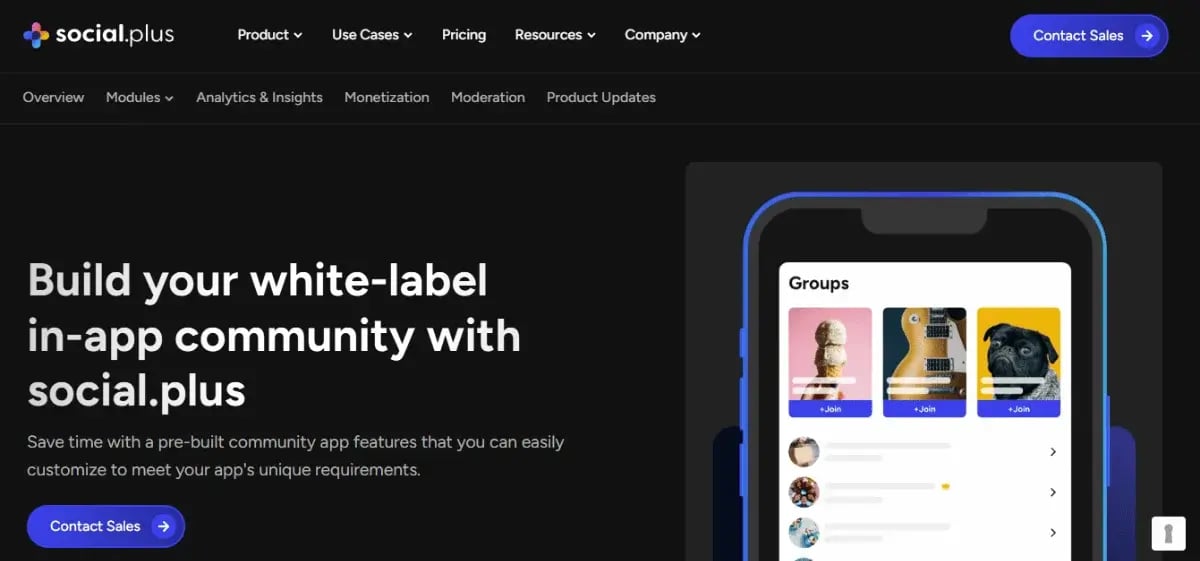
Hivebrite is an inclusive community management solution for alumni networks, nonprofits, and professional organizations with custom member directories, branded portals, and event tools.
The solution stands out with its well-defined event management tools and clean design.
On the flip side, organizations that explore Circle community alternatives for professional development will notice that the learning features lack depth.
For robust credential tracking, personalized learning paths, and social learning tools, you must employ another solution.
4. Mighty Networks
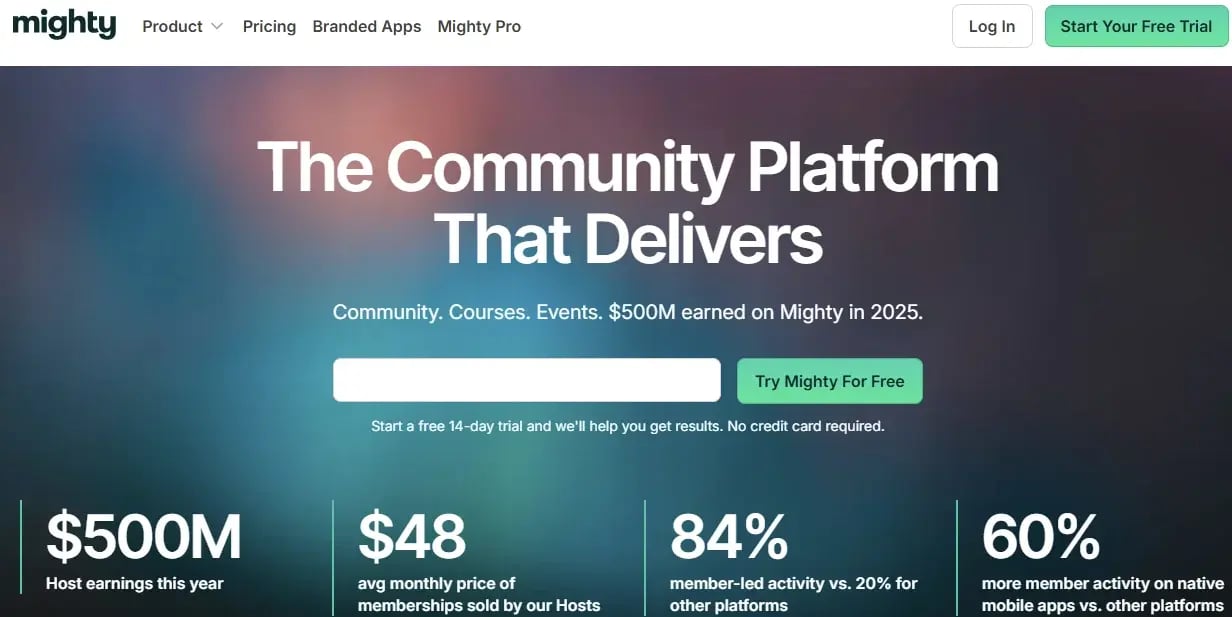
Mighty Networks bundles community and courses into a mobile-first experience for independent networks, coaches, and membership-based organizations.
Users get a handy mobile app that lets members jump into discussions, watch course content, and connect with peers on their phones without friction.
Mighty Networks also handles course sales and paid memberships well.
However, associations and professional networks that need deep AMS connections or complex certification workflows will likely have to devise workarounds or seek a better solution.
5. Breezio

Breezio takes a knowledge-centered approach to community, with AI tools that surface relevant content and connect members based on shared expertise.
Members discover relevant conversations without scrolling through forums, thanks to the AI recommendation engine.
Breezio works best for smaller organizations with modest needs and a small member population.
Associations and professional networks that require robust certification tracking, formal learning paths, and scalable analytics should assess how Breezio fits within their broader infrastructure.
Mistakes to Avoid When Comparing Circle Alternatives
Since there are many Circle.so competitors on the market, the following common missteps are worth your full attention:
- Focusing on a Forum-Only Member Experience: A clean discussion space alone falls short of a complete member experience. You need to evaluate how a solution handles learning, credentials, data, and year-round engagement as one connected system.
- Gaps in Your Behavioral Data Strategy: Login counts and page views tell you very little about why members stay or leave. Make sure you can access deeper analytics that reveal retention risks and engagement patterns across your community.
- Asking AMS Compatibility Questions Too Late: Your AMS holds the keys to your member data. Ask about those connections early because any solution that lacks a clean AMS link will create headaches later.
- A Vendor Mindset Over a Partner Mindset: Your community experience should scale with your goals. You must choose a dedicated partner that will grow alongside your association or professional network for the long term.
Treating your community and your learning strategy as two separate things is the biggest misstep of all.
When both work together, your members get a richer experience, and your organization sees measurable results.
A professional organization that connects its peer discussion groups directly to its course catalog, for example, can turn a single conversation thread into a pathway to a new credential.

Frequently Asked Questions (FAQs)
Let's wrap this up with answers to the questions we hear most from associations and professional networks as they evaluate new community solutions.
Are Circle Alternatives Better for Professional Communities?
Yes, these Circle alternatives are often a better fit for professional communities. Circle works for creators and coaches who need a simple community hub.
Associations and professional networks that manage credentials, deliver continuing education, or require AMS connections will find more value in more in-depth solutions.
Such organizations will need solutions built for professional engagement, with the governance, credentialing, and behavioral insights members require.
How Long Does It Take to Migrate From Circle to Another Platform?
Migration timelines from Circle to another solution vary based on your data volume, content library, and tech stack complexity.
The best partners will work with you to import courses and content, map member profiles, and test connections before you launch the new solution.
It's best to ask your vendor for a tailored plan with realistic milestones.
Are There Open-Source Circle Alternatives?
There are a few open-source Circle alternatives, such as Discourse and Flarum. They focus on forums but lack the robust learning, credentialing, and analytics features that associations and professional networks need.
You'd also carry the full burden of hosting and security, which makes a managed solution more practical for most organizations.
What Are the Main Limitations of Circle for Associations?
The main limitations of Circle for associations are missing native credential tracking, limited AMS integrations, and a lack of robust learning management tools.
The analytics remain surface-level, making it difficult to identify retention risk or measure member engagement.
Also, you'll outgrow Circle sooner if your association or professional network needs year-round engagement, behavioral data, and integrated learning.
Conclusion
Your community experience determines how members connect, learn, and grow with your organization. The right Circle alternatives give you a connected system for engagement, learning, and data-driven growth that goes well beyond a discussion forum.
At Forj, we combine community, learning, and behavioral analytics into one seamless member experience through Journey by Forj.
Your members get a unified journey where peer conversations reinforce formal learning, behavioral insights guide your strategy, and every touchpoint feels personal.
The future of your community starts with one conversation.
Explore the Forj experience and transform how your members learn and interact with their peers throughout the year.