



Best LMS for Associations Compared - Transform Your Learning Strategy

Many organizations still rely on legacy learning systems that make it hard to keep members connected or inspired to learn.
As an association executive or education director, you may have noticed that growth is slowing or members are losing interest in programs that once worked well. Or maybe you've been struggling to deliver modern, personalized programs that truly resonate with your members.
We understand how challenging it can be to keep members engaged year-round without the right technology in place.
The best LMS for associations goes beyond managing courses. It creates a unified, community-driven experience that fuels engagement and retention.
In this article, we'll look at what sets an association LMS apart, compare a few leading platforms, and share ideas to help you build a learning strategy that delivers a lasting member impact.
TL;DR - Best LMS For Associations
Pressed for time? Here's a quick look at the top Learning Management Systems for associations:
1. Forj
2. Maple LMS
3. Path LMS
4. Crowd Wisdom
5. Elevate LMS
6. D2L Brightspace
7. TopClass LMS
8. Oasis LMS
9. EthosCE
10. Docebo
Whether you lead learning strategy or oversee technology and integration, these platforms represent the spectrum of what's possible in association learning.
You'll find the platforms helpful in managing courses efficiently.
However, with Forj, our approach is quite different. Our all-in-one platform lets you leverage community, learning, and insights to create connected, community-powered experiences.
Book a demo today to see how Forj transforms learning for associations and professional networks.

What Makes an LMS Different for Associations vs. Corporate Training?
At first glance, most learning management systems (LMS) look the same. They host courses, track learners’ progress, report completions, and award certificates.
But associations operate differently from corporations, and their learning goals extend beyond employee training.
For associations, every course is part of a larger mission: helping professionals learn and grow in their career, advancing a profession, and delivering ongoing member value.
Your members aren't employees completing required modules. They are professionals investing in their own growth and connections.
As such, Learning Management Systems for associations and professional networks are designed to do more than manage learning content. They foster interaction between members, encourage peer-to-peer learning, and connect formal education to meaningful social learning experiences.
As a head of education or learning director, you'll find that when your LMS supports networking and collaboration rather than just coursework, member engagement and retention rise naturally.
In short, association and professional network learning thrive where community and member behavioral data merge to deliver personalized learning and create lasting member experiences.
Let's look at this at a glance:
| Feature/Focus | Association LMS | Corporate LMS | Why It Matters |
| Learning context | Linked to member value, certifications, and credentialing | Focuses on skills for internal performance | Aligns learning with member career growth and organizational mission |
| Audience motivation | Members engage to grow professionally and connect with peers | Employees complete training to meet job requirements | Association LMS must motivate voluntary participation and lifelong learning |
| Experience | Personalized, flexible, and interactive experiences | Structured, linear courses | Supports continuous engagement across the member lifecycle |
| Community integration | Core components include networking, mentorship, and peer learning | Optional discussion boards or forums | Builds member engagement and strengthens professional connections |
| Data usage | Analyzes engagement, churn risk, and trending topics | Tracks completions and compliance | Helps leaders make data-driven decisions for retention and increasing non-dues revenue |
Why Associations Need a Dedicated Learning Management System
From the differences above, you'll agree that non purpose-built platforms often leave members disengaged and learning outcomes underwhelming.
Like most association leaders, you feel that your current LMS underdelivers on engagement because it focuses on hosting courses only.
Here's why you need an all-inclusive learning management system for nonprofits and professional networks:
- Connecting Learning to the Member Experience: Association and professional network executives view learning as both a mission and a revenue opportunity, making it necessary to integrate it with community interactions and career development. For example, a professional society can link certification courses with discussion forums to increase membership participation and repeat course enrolment.
- Driving Retention Through Better Engagement: Course portals often fail to sustain interest. You can shift to a dedicated LMS to embed social learning, peer mentoring, and gamified pathways to encourage continuous or always-on engagement. A robust, vibrant community — what we call community-led growth — is key to member retention.
- Generating Non-Dues Revenue: You can use a dedicated LMS to monetize learning beyond membership fees. You can use credentialing programs, virtual conferences, and online courses to provide additional income streams. For example, a trade association that offers tiered online courses can increase revenue by integrating learning with community features.
- Leveraging Data for Smarter Decisions: Education and IT leaders need actionable insights into member behavior. LMS analytics can reveal which courses drive completion, identify content gaps, and highlight potential churn risks. These insights are necessary for making informed strategy adjustments.
Using this dedicated approach, you position learning as more than content delivery. For your members, learning becomes a central pillar of member experience, linking education, community, and data to deliver measurable outcomes.

Essential Features Every Association LMS Should Have
Wondering what features your LMS should have to deliver the above capabilities?
Let's examine the key features that make a modern LMS association-ready:
- Personalized Learning Paths: Your association members should receive recommendations based on their goals, interests, and past activity. Personalization keeps learning relevant and encourages repeat participation.
- Credentialing and Certification Support: Your association should be able to track professional development and continuing education requirements efficiently. Being able to monitor these adds tangible career value for members while using learning to drive growth through non-dues revenue.
- Community Integration: Peer mentorship, group activities, and discussion forums facilitate connections among members, fostering a sense of community. Such social learning strategies increase engagement and retention across the member lifecycle.
- Behavioral Analytics and Reporting: Modern LMSs make it easy to collect data regarding course completion, content trends, and engagement patterns. As professional network and association leaders, you can use these practical insights to identify growth opportunities and make informed strategic decisions.

Top 10 LMS Platforms for Associations
Using the right LMS is critical for associations looking to engage members, make learning enjoyable, and unlock new revenue streams.
Let's explore the best options available:
1. Forj
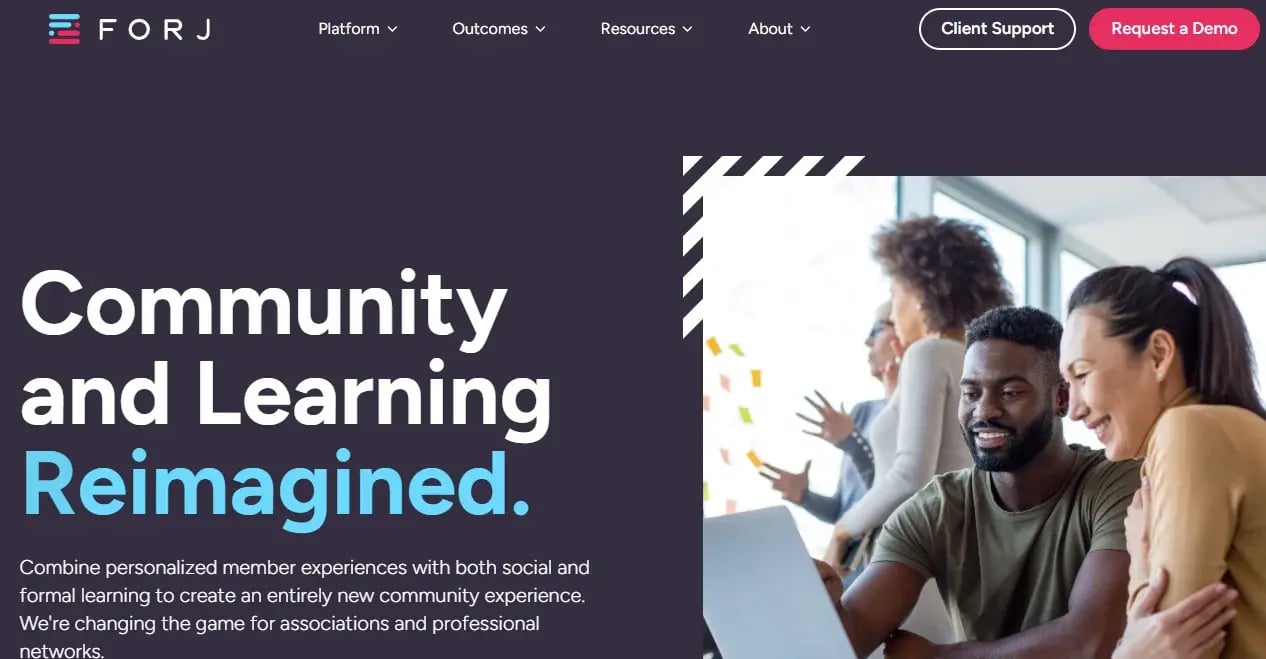
Forj is built specifically for associations and professional networks looking to unify learning and engagement. With our service, you can experience the following solutions:
- Unified Experience: Journey by Forj integrates community networking and learning into one seamless experience for professional networks and associations. Our LMS enhances the member experience by delivering personalized learning paths and fostering peer connections based on individual member behavior. We don’t treat education and community as separate offerings.
- Behavioral Analytics: With Forj Analyze, you can use analytics and member behavioral data to measure engagement and churn risk. You can also surface trending topics and discussions to identify new content opportunities, as well as pinpoint highly engaged members or subject matter experts who can mentor others. These LMS analytics help you make data-informed decisions, including how to enhance your organizational strategy.
- Credentialing Support: We support modernized and personalized learning experiences that tie directly to your members’ individual credentialing and professional goals.
- Revenue Generation: Our platform supports monetized learning or non-dues revenue streams through online courses, events, and sponsorships.
Explore the Forj experience to see how a unified LMS transforms member learning and engagement.
2. Maple LMS
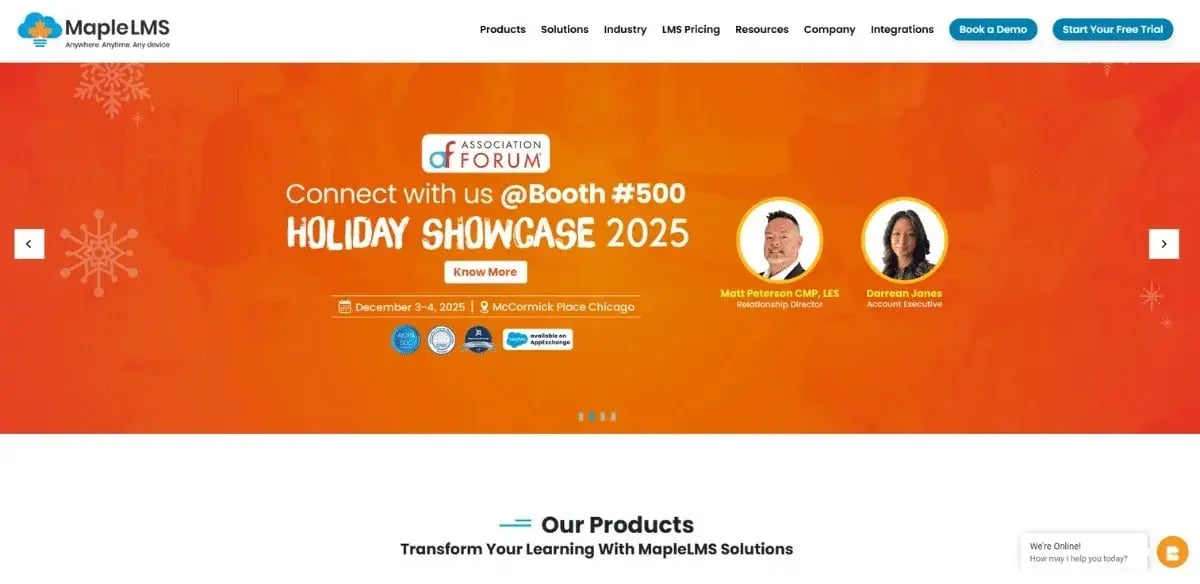
Maple LMS is designed for membership management, helping users track learning progress alongside customer or membership data.
The platform is best suited for associations that want reporting and CRM-connected learning operations.
However, it lacks the deep behavioral insights and unified approach that connect learning to community engagement.
3. Path LMS
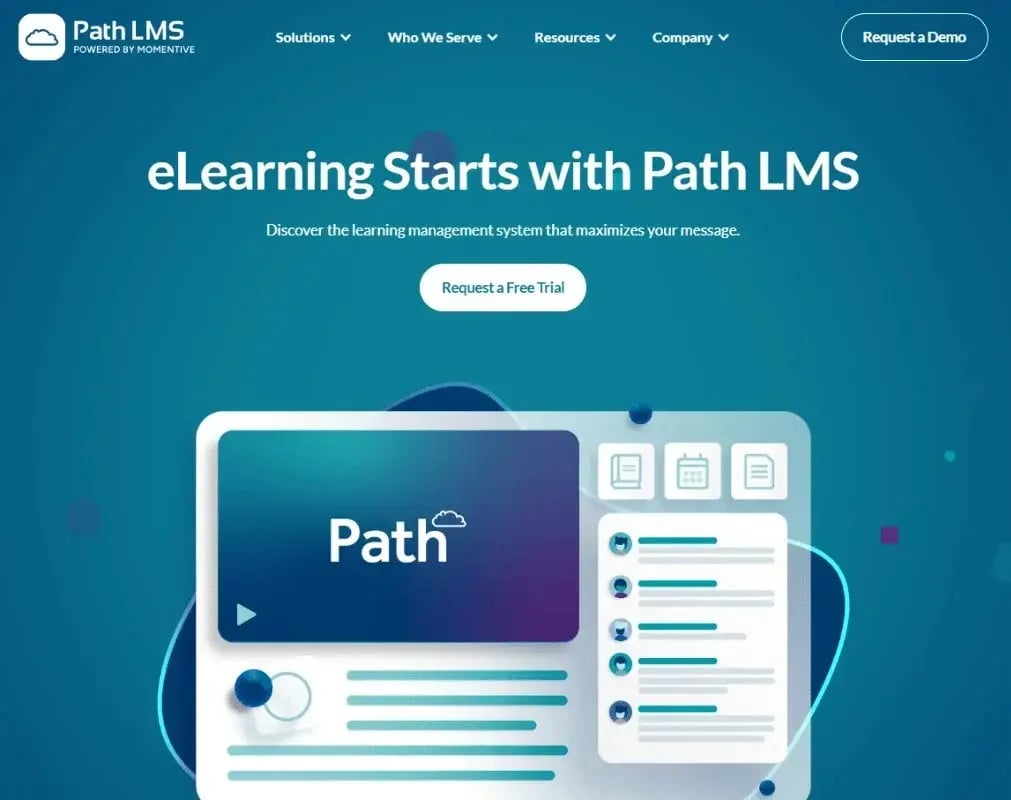
Path LMS by Momentive is a video-centric online learning platform that allows associations to deliver interactive courses and multimedia content.
The LMS is ideal for organizations that focus on digital video-based course delivery and on-demand learning.
The shortcoming of Path LMS is that it lacks the right features to link your content to credentialing, mentorship, and actionable engagement metrics.
4. Crowd Wisdom LMS
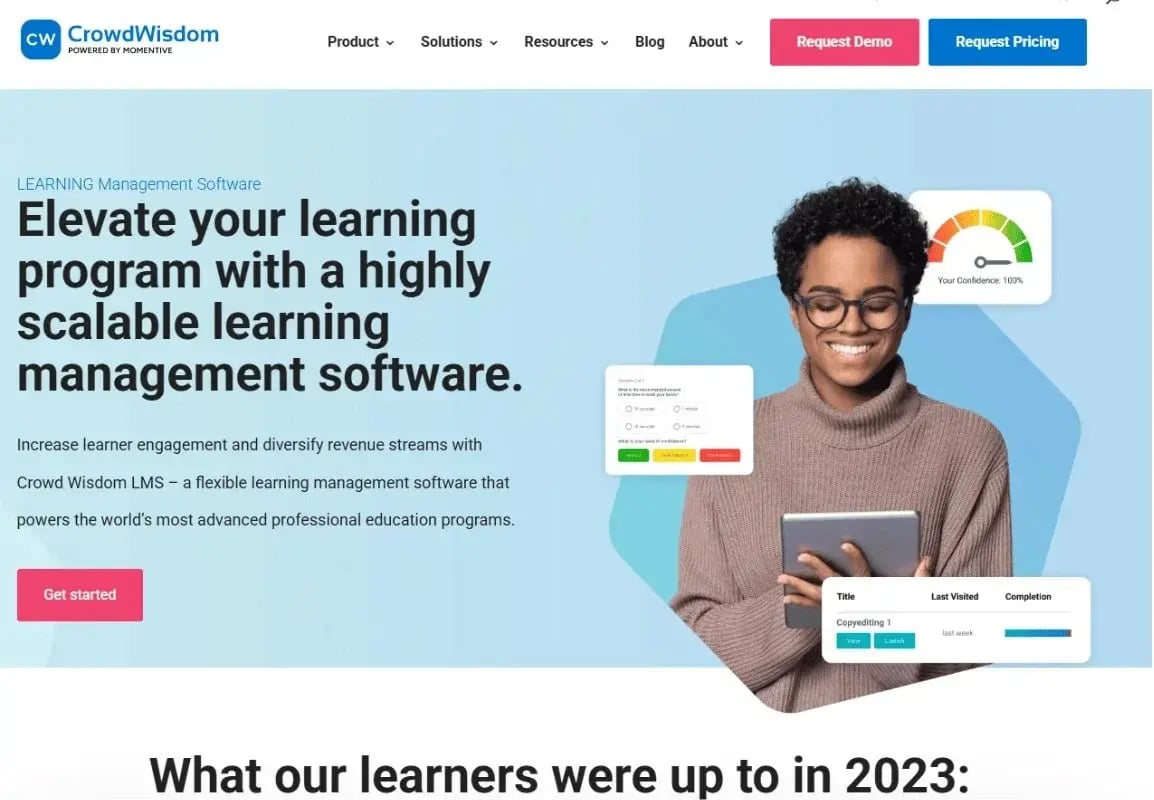
Crowd Wisdom is designed for associations to manage certifications, ongoing education, and professional development programs. Organizations can track member progress and meet credentialing requirements.
With Crowd Wisdom, you’ll notice less concentration on continuous social learning and analysis, which means it doesn’t enable leaders to identify engagement trends and revenue opportunities on time.
5. Elevate LMS

Elevate LMS is a learning platform built for associations that deliver virtual conferences, webinars, and continuing education.
The LMS is ideal for associations that rely heavily on hybrid education and want a single hub for recordings, webcasts, and event-driven learning products.
The disadvantage is that Elevate LMS focuses more on event-based learning than continuous engagement, offering limited analytics and community features for long-term member development.
6. D2L Brightspace

D2L Brightspace is an academic-style LMS built for higher education, offering structured courses, assessments, and adaptive learning.
Associations with formal, university-like programs may appreciate D2L Brightspace’s detailed testing systems and control over the curriculum.
The main problem is that the LMS isn't designed for associations, meaning it lacks native membership workflows, continuing education tracking (CE tracking), and community learning solutions.
7. TopClass LMS
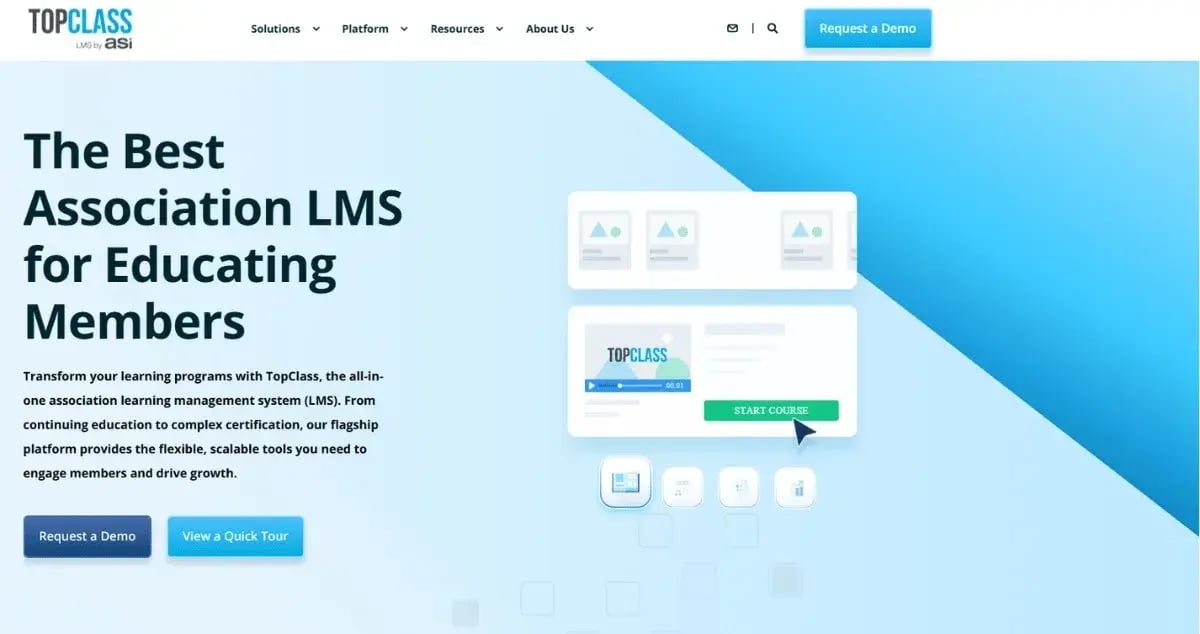
TopClass allows associations to manage certification, personalize learning pathways, and generate revenue.
The LMS is well-suited for associations that prioritize credentialing or offer comprehensive professional development programs.
TopClass’s user interface can feel less intuitive, which may reduce learner engagement compared to more modern LMS designs.
8. Oasis LMS
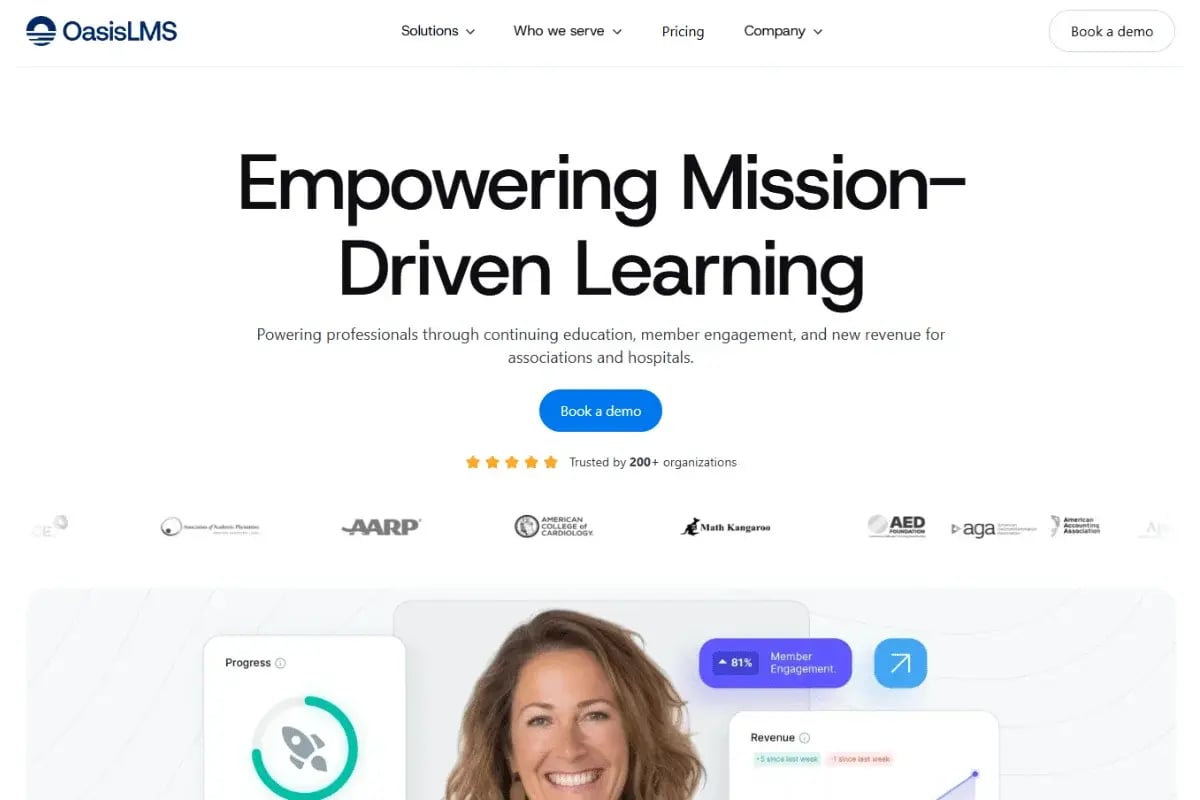
With Oasis LMS, users get professional training programs, compliance education, and certification. The LMS supports structured course management for associations and nonprofits.
Oasis LMS capabilities are limited in that it doesn’t integrate community features that foster peer-to-peer learning and member interaction, resulting in a less socialized experience.
9. EthosCE
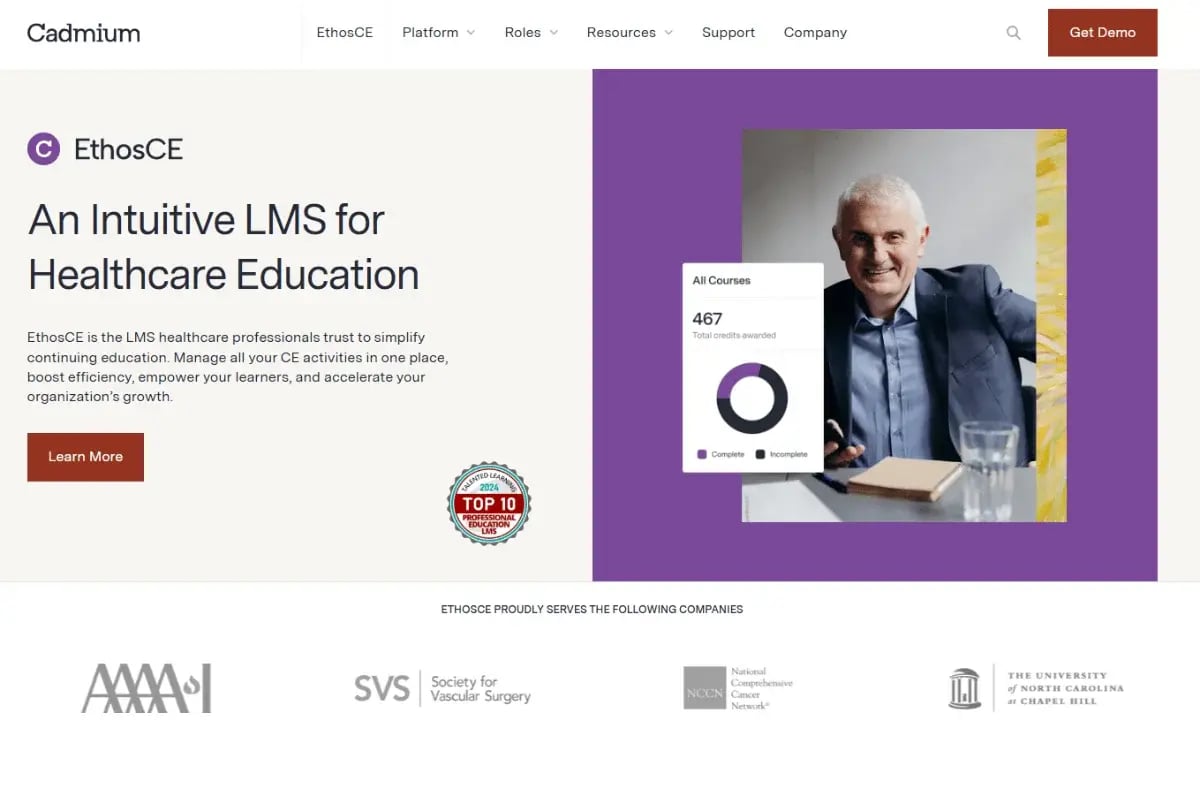
As a healthcare-focused LMS designed for managing clinical education requirements, EthosCE provides compliance tracking, outcomes reporting, and accreditation management.
You'll want to use the LMS if you are a medical association or clinical organization that requires strict oversight and audit-readiness tracking.
Since it's healthcare-specific, EthosCE is overly specialized and less suitable for associations outside the medical field.
10. Docebo
Docebo is an AI-driven corporate LMS built for employee training, customer education, and large-scale learning operations.
If your association has enterprise-style programs or global audiences, you may find the scalability and multilingual support of Docebo appealing.
The drawback is that since it's corporate-focused and not built specifically for associations, it lacks native CE features, AMS integrations, and membership-specific workflows.
How to Evaluate and Choose the Right LMS for Your Association
Choosing an LMS from these options is a strategic decision that affects how your members learn, connect, and grow.
You'll want to evaluate each LMS through the lens of long-term impact and organizational fit based on:
- Scalability and Flexibility: Your preferred LMS should grow as your community grows. Look for a platform that adapts to increasing member numbers, diverse learning formats, and new engagement models without ruining the user experience.
- Member-Centric Design: You'll want a member-first platform that prioritizes ease of use, intuitive navigation, and accessibility. With such a platform, you can increase adoption, member satisfaction, and long-term retention across all the segments of your audience.
- Seamless Integration: Go for a system that integrates easily with your AMS, communication tools, and event platforms. Seamless connectivity ensures an ecosystem where data flows freely, which helps your teams make better decisions and enhance member experience.
- Collaboration and Team Alignment: Look for a system that brings your membership, education, and technology teams together. Collaboration will ensure each team's goals are aligned before and after implementation, from engagement to analytics.

Implementation Best Practices for Association LMS Success
Once you've chosen your LMS, success depends on how well you align people, processes, and technology. Implementation isn't just setup. It's more about alignment.
Let's check out some best practices to increase your chances of success:
- Start with Strong Onboarding: Engage your internal teams and members in the process from the outset. Offer clear training, promote shared goals, and ensure transparent communication so that everyone understands how the new system supports engagement and learning.
- Plan Data Migration Thoughtfully: Audit and organize your existing learning records, credentials, and member data before migration. Having clean data creates a smoother transition for both staff and members, besides making analytics and reporting more accurate.
- Communicate and Partner for Success: Keep every stakeholder informed about what's changed and how it benefits them. You should also look for a vendor who acts as a partner in digital transformation, providing guidance beyond going live to help you sustain adoption and growth.
When done right, your LMS becomes the heartbeat of member growth. You can use it to connect people, learning, and insights in ways that strengthen your entire association.

Frequently Asked Questions (FAQs)
Depending on the stage you're at in your LMS, these common questions can help guide your association’s next steps:
What Features Should an LMS for Associations Include?
An effective LMS solution should have features such as personalized learning, analytics, community engagement, credentialing, and seamless integration with your existing tech stack.
Together, these features create a connected, data-informed member experience.
Are There LMS Platforms Specifically Designed for Associations?
There are many LMS platforms built specifically for associations. Depending on the platform, your association can get learning management, data insights, and community engagement.
How Much Does an LMS for Associations Typically Cost?
The pricing for association LMSs varies depending on the vendor, membership size, the specific use case, integrations, and the specific features available.
Most associations invest in scalable solutions that strike a balance between affordability and long-term value through better engagement and higher non-dues revenue.
Can an LMS Integrate With My Association Management System (AMS)?
Many top LMS systems (including Forj) integrate with AMS tools to sync member data, track learning progress, and surface engagement insights.
LMS-AMS integrations ensure your association delivers a unified, seamless experience for both staff and members.
How Do Associations Use LMS Platforms to Increase Member Engagement?
Associations use LMS platforms to deliver interactive learning, peer collaboration, and credentialing opportunities that keep members involved throughout the year.
When learning connects to the community, most associations can naturally grow education revenue, member engagement, and retention.
Conclusion
The right LMS can transform how your association delivers value by turning learning into a continuous member experience. Your member engagement levels increase when education, community, and data work together in a single, connected platform.
Whether you lead strategy, membership, or technology, focus on systems that do more than manage courses. A modern LMS should make learning more personal, make participation less stressful, and deliver measurable outcomes.
With Forj as your LMS, you can build a future where every learning moment strengthens your community, every connection brings insight, and every decision guided by data moves your association and members forward with purpose and confidence.
Discover how Forj helps associations build connected, data-driven learning experiences that drive retention and growth.